A more resilient, productive finca — planned around how your land actually works.
I help owners of fincas in the Axarquía and the wider Málaga region understand their land and decide what to do with it: how to keep rainwater on the property, rebuild tired soil, plant the right things in the right places and reduce exposure to wildfire.
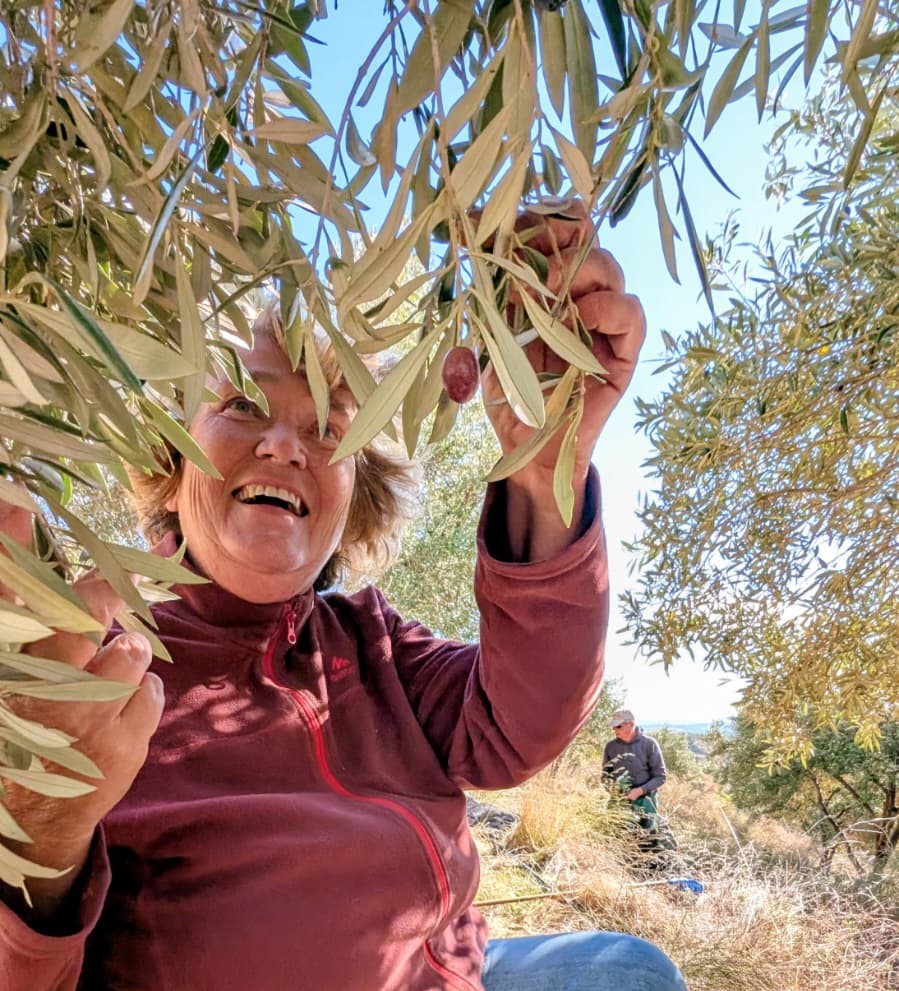
Mi Campo Vivo is an independent practice for land assessment, finca design and training. I work with people who own a finca, a rural garden or agricultural land in southern Spain and want it to become healthier, more productive and easier to look after — without spending money on measures that do not fit the site.
Familiar problems on Mediterranean land
Most finca owners I speak with recognise at least one of these. They are rarely separate issues.
- The land is getting drier Long, hot summers and unreliable rain leave soil hard and plants stressed for months at a time.
- Rain arrives all at once Heavy autumn and winter storms run straight off the slopes, taking soil with them, instead of soaking in.
- The soil has lost its life Bare, compacted or eroded ground holds little water and few nutrients, and new planting struggles to establish.
- Trees fail or never thrive Species chosen for the wrong spot, or watered in the wrong way, cost money and years of waiting.
- Fire is a real worry Overgrown scrub, dry grass and pine close to the house raise the question of what should be cleared, kept or changed.
- No overall plan Terraces, irrigation, new trees and clearing are done one at a time, and do not always work together.
One piece of land, looked at as a whole
Soil, water, plants and fire exposure are connected. Soil rich in organic matter holds more of the rain that falls. Water that soaks in decides what can grow and where. What grows, and how it is managed, shapes how a fire might behave around your house.
So I do not start with a product or a standard solution. I start by reading the site — slope, soil, water flow, exposure, vegetation and how you want to use the land — and then set priorities. Some fincas need work on soil first; others need water or fire risk addressed before anything is planted.
- Soil holds the water and feeds the plants
- Water decides what can grow, and where
- Planting shapes shade, shelter and fire exposure
- The plan puts it all in the right order
Four areas of work, one approach
You can start with a single question — or ask for an integrated design that brings all four together.
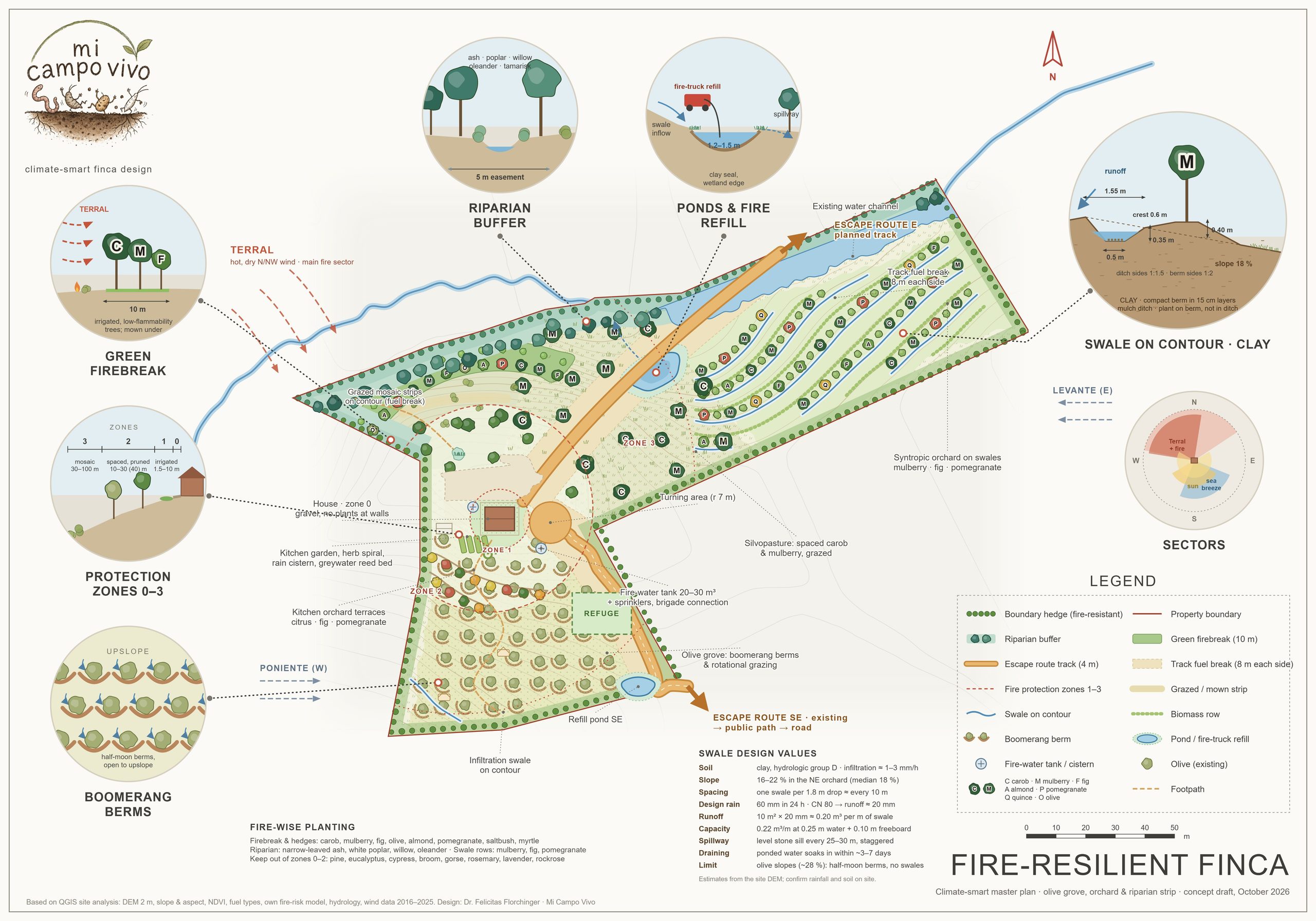
Central service
Resilient Finca Design
Climate-Smart Finca
A site-specific assessment and design for your whole property: how water moves, what the soil needs, where fire exposure lies, which areas suit which uses, what to plant — and in what order to do the work.
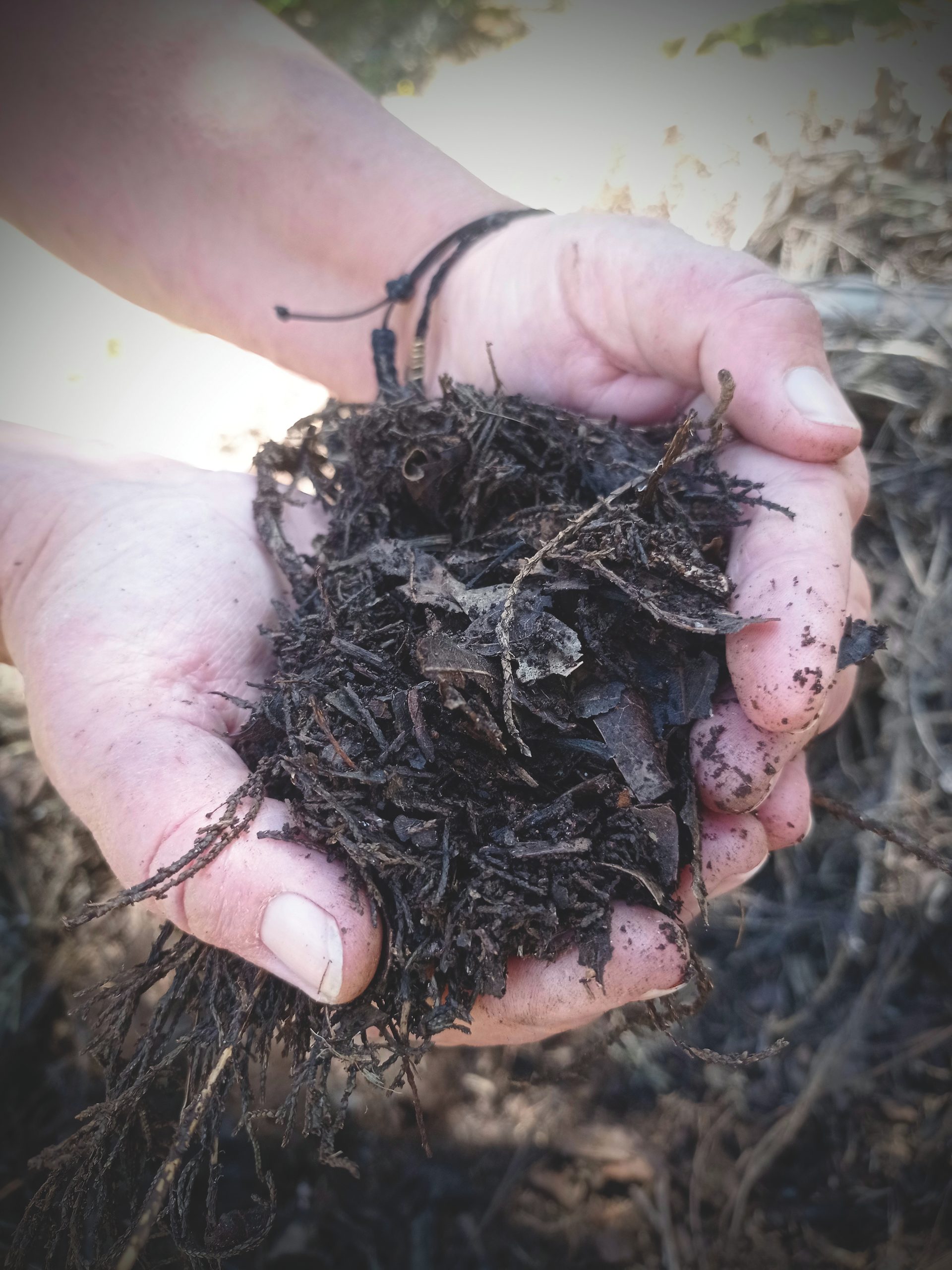
Suelo Vivo
Soil regeneration
Rebuilding organic matter, structure and soil life so the ground holds water and supports healthy plants.
Water-Smart Finca
Water and runoff
Understanding how rain moves across your land and keeping more of it in the soil, where it is useful.
Fire-Smart Finca
Wildfire risk
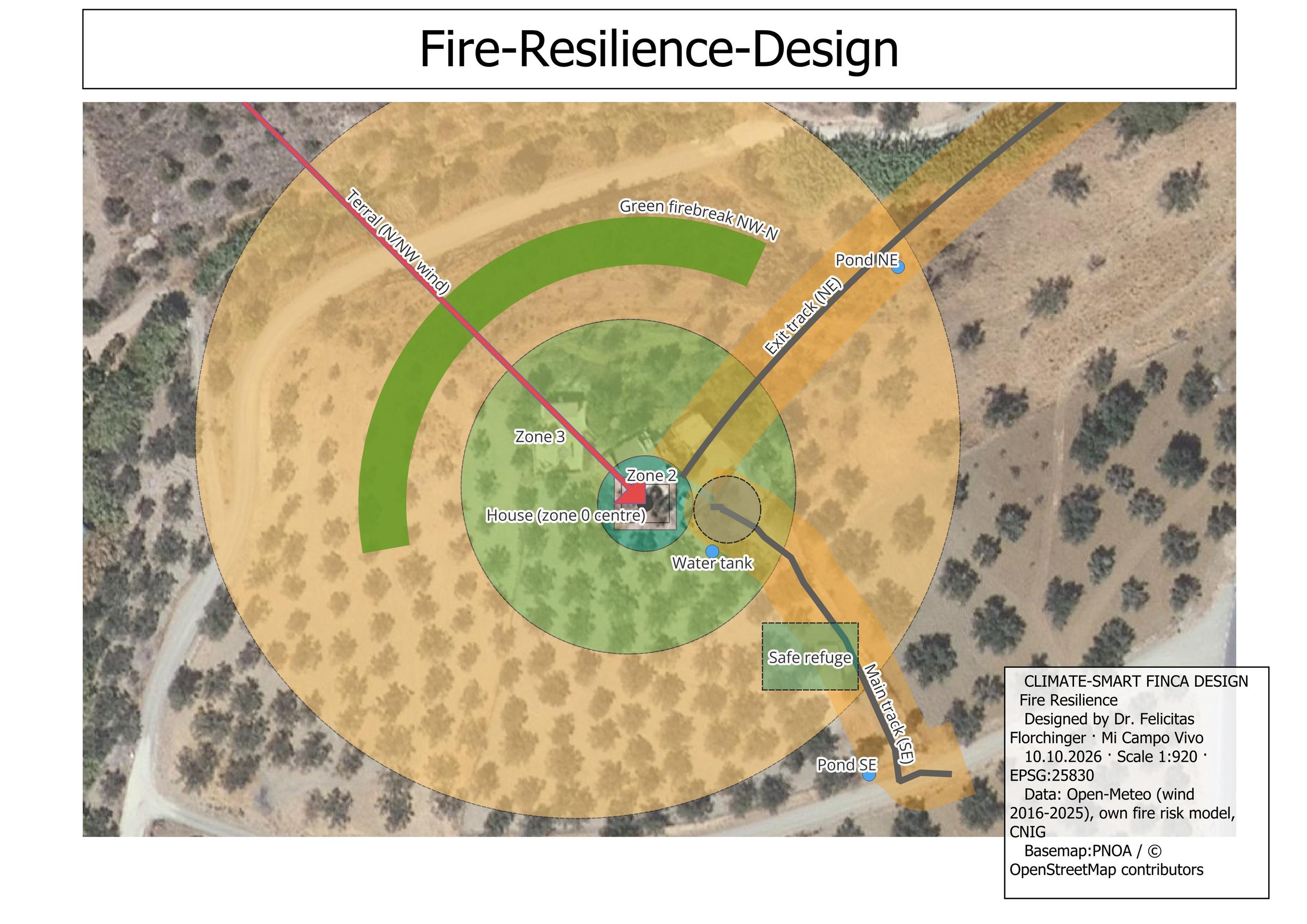
Reading vegetation, slope and access around your buildings and planning a more fire-aware layout and maintenance.
From first conversation to work on the ground
The scope depends on your property and your questions. A typical sequence looks like this.
- Initial conversation We talk about your finca, what worries you and what you hope for. I tell you honestly whether and how I can help.
- Site assessment I walk the land with you and look at slope, soil, water flow, vegetation, exposure and access, supported by maps and terrain data.
- Analysis and priorities I explain what is happening on the land and what matters most — so decisions are made on evidence, not guesswork.
- Design A plan for your property: zones, recommended interventions and planting, set out in maps and clear explanations.
- Phased implementation The work is put in a sensible order and budget phases. I can advise, train you or your team, and accompany the implementation.
Scientific background, practical approach
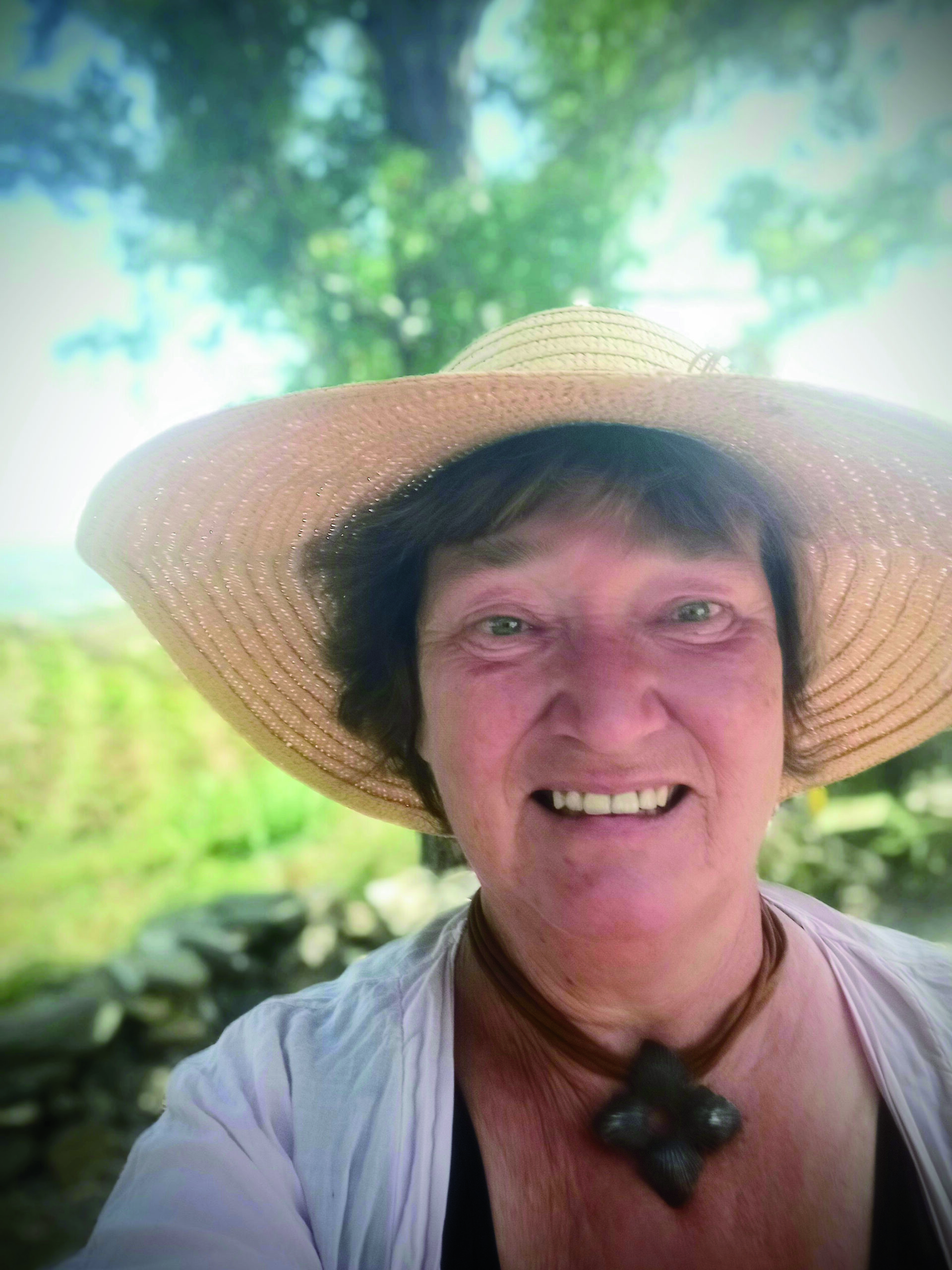
I am Dr. Felicitas Florchinger, an agronomist with a doctorate in agronomy and decades of international experience. My work focuses on agroecology and resilience design, and I am a certified permaculture designer.
What I bring to your finca is the combination: a scientific understanding of soils, water and plant systems, and the practical judgement to turn it into decisions that work on a real Mediterranean hillside.
- PhD in Agronomy
- Decades of international experience
- Specialised in agroecology
- Specialised in resilience design
- Certified Permaculture Designer
Maps that lead to decisions
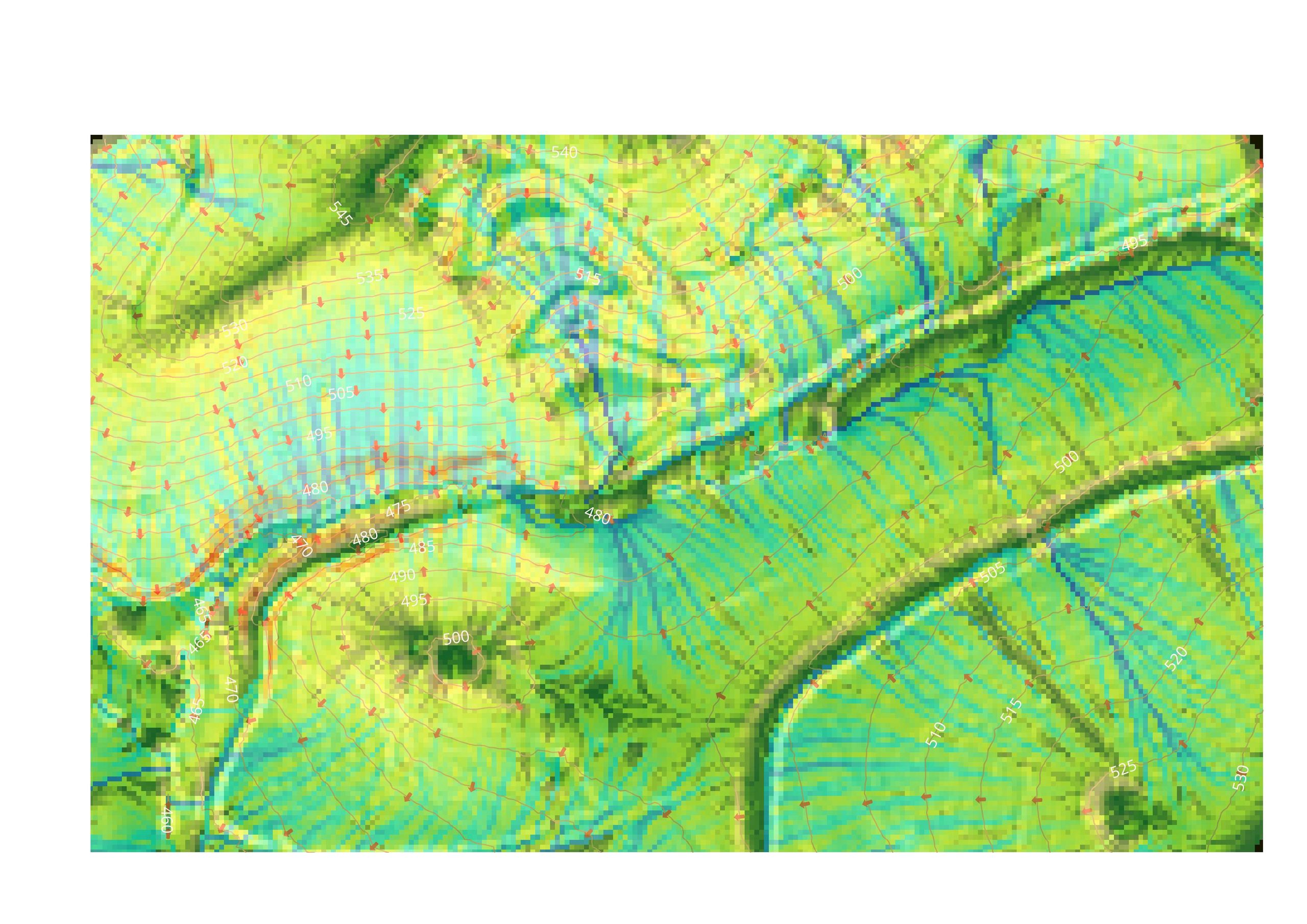
Terrain, slope and water-flow analysis are part of every design. They make visible what is hard to see on the ground — and show why one measure belongs here and not there.
Read the terrain
Contour lines show where the slope is steep and where it is gentle. Where they bend uphill, there is a valley line — the place water will gather.
Follow the water
Rain runs downhill at right angles to the contours and concentrates in the valley line. That is where erosion starts and where the most water can be slowed and soaked in.
Look at fire exposure
Fire tends to move faster uphill, and dense dry scrub below a house adds to the exposure. Access, vegetation and slope are read together.
Decide what goes where
Lower-fuel, well-tended ground around the house. Planting and soil cover along the contours on the gentler slopes. The valley line kept vegetated and slowed only where the site allows. Each choice follows from the layers before it.
Illustrative example drawn for this website.
Learn to read and care for your own land
Practical courses and individual training for finca owners who want to understand what they are doing and why: soil regeneration, compost and homemade fertilisers, water management, permaculture and agroecology in a Mediterranean climate.
Tell me about your finca
Where is it, how large is it, and what concerns you most? A short message is enough to start. I will reply personally.